
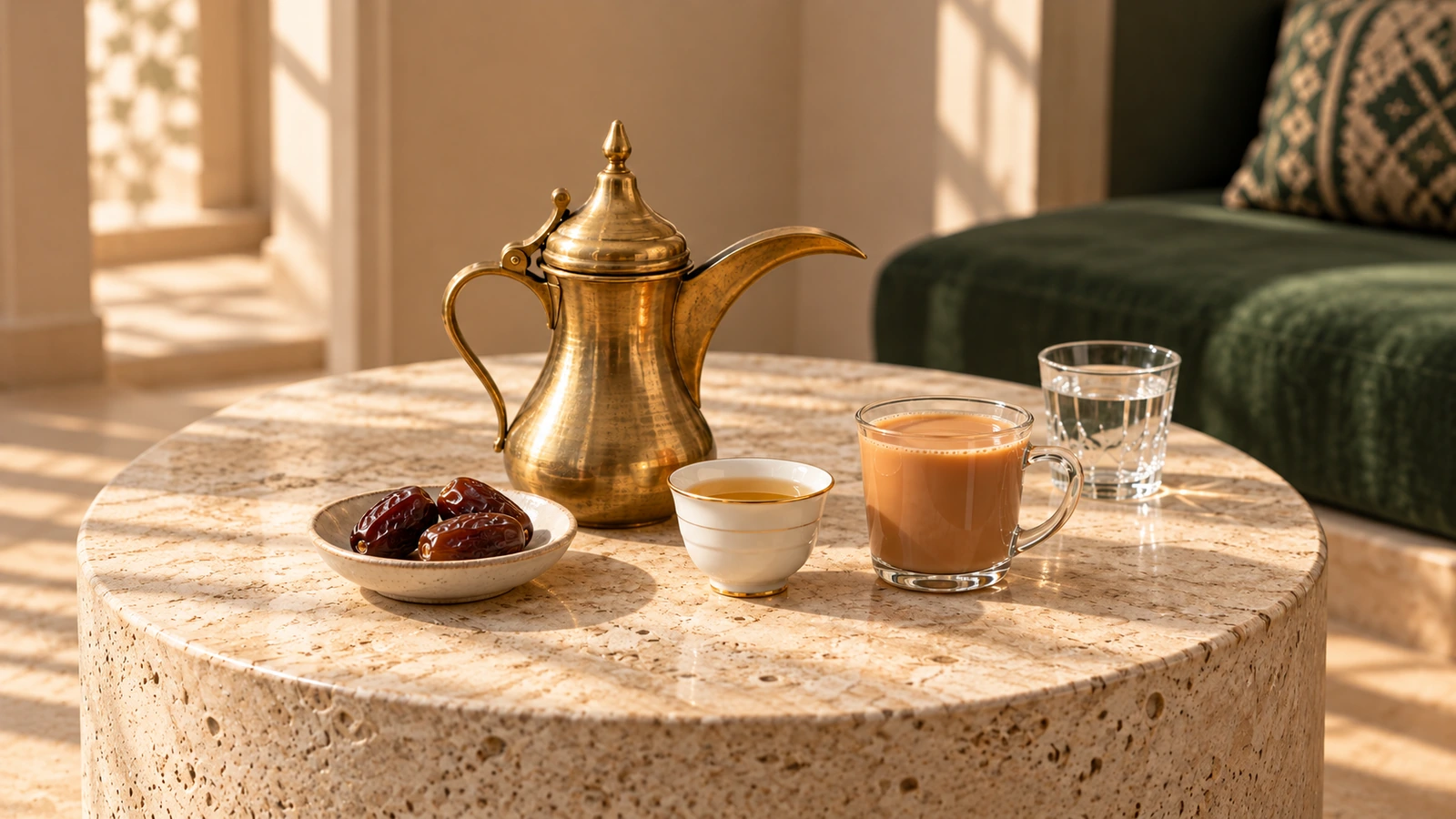
From a morning karak at the cafeteria to gahwa shared with family in the evening, these drinks are familiar parts of life in Abu Dhabi. How can you enjoy them while protecting your teeth? A few changes to sugar, sipping, and daily care can help.
Understand how your drinks affect your teeth
The main dental concern with sweetened karak is sugar. Bacteria in dental plaque, a sticky film that forms on your teeth, use sugar to produce acids. Over time, repeated exposure to these acids can weaken tooth enamel, the hard outer layer of your teeth, and cause cavities. Frequent consumption of sugary drinks increases this risk, especially when oral hygiene is inadequate. [1]
Tea and coffee can also cause surface staining. Staining and tooth decay are different concerns: stains mainly affect appearance, while decay damages tooth structure and may develop without an obvious color change. [2,3]
Reduce sugar in karak and be mindful of sweets served with gahwa
If you regularly stop at a cafeteria for karak before work, ask if yours can be made less sweet. Sugar may already be mixed in or come from sweetened condensed milk, so skipping extra sugar may only partly reduce the amount in your cup. You can ask about the ingredients before ordering. At home, gradually reduce the sugar or choose unsweetened milk while keeping the familiar tea and spices.
Arabic gahwa is traditionally served without added sugar, although recipes and preferences vary. At family gatherings or in the majlis, it often comes with dates or sweets such as lugaimat. Whole dates provide fiber and nutrients alongside naturally occurring sugars; lugaimat may contain added sugar or syrup. These foods differ nutritionally, but dried dates can still affect dental health because they are high in sugar and can stick to teeth. Enjoy them with meals rather than repeatedly snacking throughout the day. [4] How often your teeth encounter sugar matters too. [1]
How you drink karak also matters. If you buy a sweetened cup during your morning commute, let it cool to a comfortable temperature and enjoy it in one sitting, rather than returning to it repeatedly over several hours at your desk. Each exposure to sugar gives plaque bacteria another opportunity to produce acids that can damage teeth. [5]
If you enjoy several cups of karak daily, you do not need to change everything at once. Start by reducing the sugar in one cup, perhaps your afternoon order, and build on that habit when it feels comfortable.
Reduce staining and protect your enamel
Tooth discoloration can occur on the surface or within a tooth. Professional cleaning may remove surface stains; changes within a tooth may need investigation or different treatment. Your dentist can assess the cause. [2]
A simple habit is to keep water alongside your karak or gahwa. Drinking water afterward can help wash away some residue and provides a useful alternative to another sweetened drink. However, water does not replace brushing or remove stains that have already developed.
Avoid aggressive scrubbing and abrasive home whitening remedies, which may irritate gums or wear tooth surfaces. Before whitening, speak with your dentist, especially if you have sensitivity, fillings, or crowns. Bleaching can lighten natural teeth, but does not lighten fillings or crowns, so a color mismatch may result. [2]
Make daily oral care part of your routine
Consistent oral hygiene helps protect your teeth and gums. Build these habits around work, family commitments, and evening gatherings.
Brush twice daily: Brush for two minutes each time using fluoride toothpaste, including last thing before bedtime. Adults should choose toothpaste containing at least 1,350 parts per million (ppm) fluoride. Check the packaging for the concentration. [6,7]
Clean between your teeth: Use dental floss or appropriately sized interdental brushes daily to remove plaque from areas your toothbrush may not reach. [6,7]
Spit without rinsing: After brushing, spit out excess toothpaste without immediately rinsing with water. This keeps fluoride on your teeth for longer. [6]
Replace worn toothbrushes: Change your toothbrush or electric toothbrush head when the bristles become frayed.
For families, these habits can become part of the morning and bedtime routine. Parents can help younger children brush effectively, supervise their cleaning, and choose an age-appropriate amount of fluoride toothpaste. If you are unsure what is suitable for your child, ask a dental professional. [6]
Know when to visit your dentist
Have regular dental checkups even without pain, as early decay may cause no symptoms. [3] Your dentist can recommend the interval based on your needs. Arrange an appointment for persistent sensitivity, toothache, swollen or bleeding gums, or a visible cavity. An examination can establish the cause and appropriate care. [3,7]
Keep checkups as advised, but seek urgent dental assessment for worsening tooth pain or facial swelling. If swelling makes breathing or swallowing difficult, seek emergency medical care immediately. [8]
If tooth discoloration is your main concern, your dentist can explain whether cleaning, whitening, or further investigation is appropriate.
When you next stop for karak, ask whether a less sweet cup is available. Some cafeterias can adjust the sugar; others use a sweetened batch or sweetened condensed milk. Ask what can be changed in your usual order, and start there.
References
- World Health Organization (WHO). Sugars and dental caries. Published August 14, 2025.
- American Dental Association (ADA). Whitening. Last updated August 16, 2022.
- National Health Service (NHS). Tooth decay. Last reviewed August 13, 2025.
- National Health Service (NHS). How to cut down on sugar in your diet. Last reviewed October 3, 2022.
- American Dental Association (ADA), MouthHealthy. Sugary drinks and your smile. Last updated April 2026.
- National Health Service (NHS). How to keep your teeth clean. Last reviewed June 30, 2025.
- Centers for Disease Control and Prevention (CDC). Oral Health Tips for Adults. Published May 15, 2024.
- National Health Service (NHS). Dental abscess. Last reviewed March 18, 2026.
Source notes
All sources accessed October 24, 2026.