
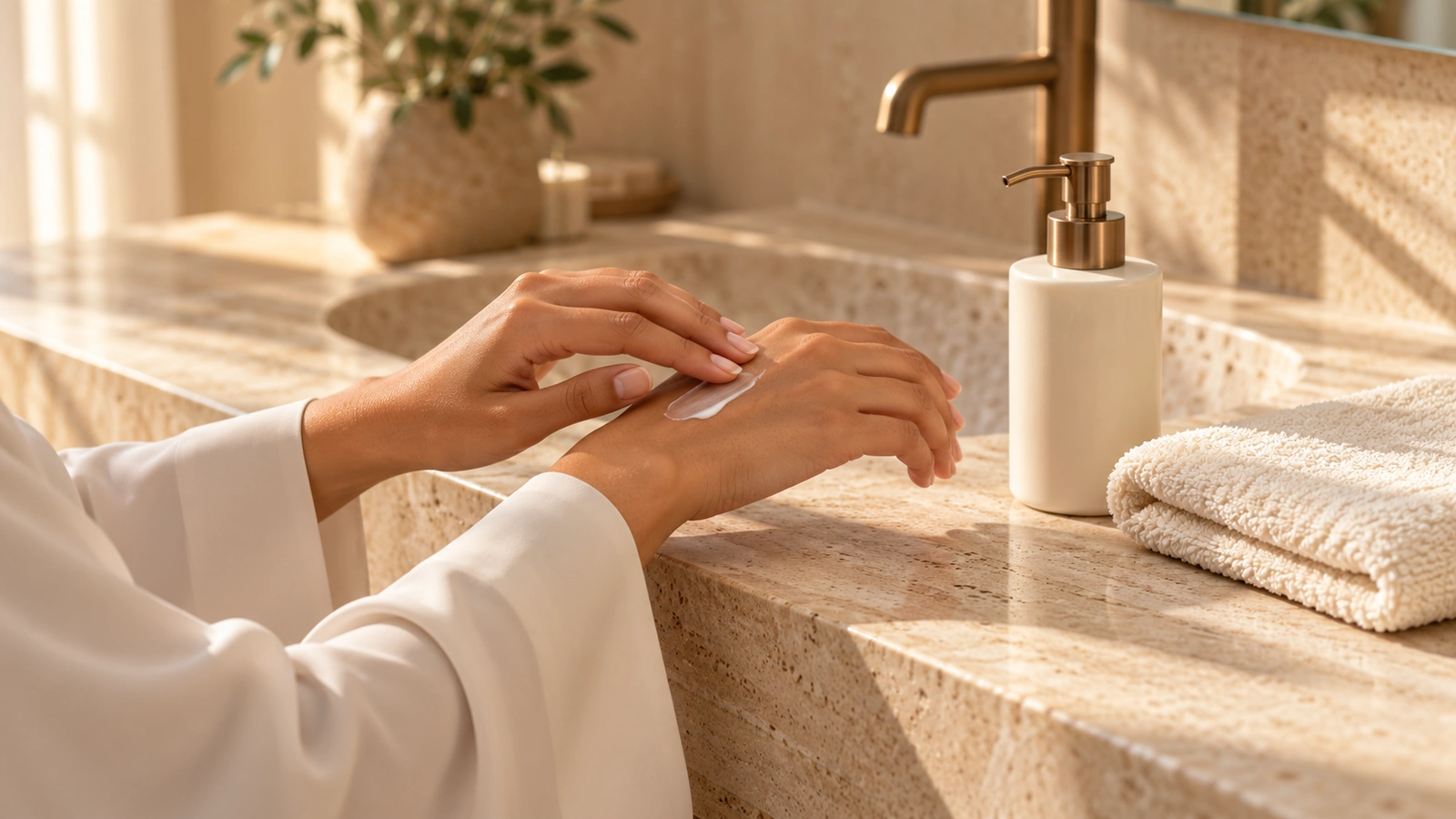
Air conditioning offers welcome relief from the UAE’s heat, whether you are at home, at work or on the move. But after hours indoors, you may notice tightness in your skin, rough patches on your hands, or an itch that keeps returning.
A few simple changes to your daily routine can help keep your skin comfortable without making skin care complicated.
Understand why your skin feels dry
Dry skin develops when the skin loses too much water. In the UAE, hot weather often means spending long hours in air-conditioned homes, cars and workplaces. Although it can be humid outside, air conditioning can lower indoor humidity, making it harder for the skin to retain moisture. This can contribute to the tightness, roughness, or itching you notice during the day. [1,2]
However, it is important not to assume that air conditioning explains every dry patch. Long, hot showers, harsh soaps and frequent scrubbing can also contribute. Conditions such as eczema or psoriasis, and some medicines, may be involved too. [3]
Notice when dryness appears, for example, during a long evening in an air-conditioned majlis or after washing for wudu. Keeping hand cream beside the washbasin can remind you to moisturize afterward while maintaining your usual washing practices. These observations can also help you explain your symptoms if you need professional advice.
Choose a moisturizer that suits your skin
A suitable moisturizer helps your skin retain water and feel more comfortable. For noticeably dry skin, creams and ointments generally work better than light lotions. Choose a texture that suits the area you are treating and feels comfortable enough to use regularly. For example, use a cream during the day and a thicker ointment on very dry areas at bedtime. [1,4,5]
Look for a fragrance-free product containing ingredients such as ceramides, glycerin or shea butter to help keep your skin hydrated. Choose “fragrance-free” rather than “unscented,” as unscented products may still contain fragrance ingredients. If your skin is acne-prone, look for a product labeled “noncomedogenic,” meaning it is designed not to clog pores. [6]
Gently apply your moisturizer after washing, while your skin is still slightly damp, to help lock in moisture. Reapply whenever your skin feels dry or tight. [5,7]
If you are unsure which product to choose, your doctor can recommend a suitable emollient, a moisturizing treatment that helps soften the skin and retain moisture. You may need to try more than one product to find what works best. If a product causes irritation that does not settle, ask your doctor about an alternative. [5,6]
Make showers and handwashing gentler
After a busy day, a long, hot shower may feel relaxing, but it can strip away the natural oils that help your skin retain moisture. Keep showers to around five to ten minutes and use warm rather than hot water. Avoid vigorous scrubbing with loofahs or rough sponges. After washing, gently pat your skin dry and apply moisturizer while it is still slightly damp. [6,7]
Choose a mild, fragrance-free cleanser rather than a heavily perfumed soap or shower gel. For dry or sensitive skin, a soap-free cleansing cream or a suitable emollient wash may be more comfortable. Avoid choosing products simply because they are labeled “natural,” as fragrances and other ingredients may still cause irritation. If you have eczema or persistent discomfort after washing, ask your doctor about a suitable soap substitute. [5,7]
For handwashing, use a mild, moisturizing soap, wash thoroughly and rinse well. Pat your hands dry, then apply a fragrance-free cream. Continue washing whenever needed; moisturizing afterward helps care for your skin without compromising hand hygiene. [5,6,7]
Build skin care into your indoor routine
Make your chosen moisturizer easy to reach. A tube beside your bathroom sink or at your desk can serve as a reminder to use it. Keeping a suitable product at home and work can also make a regular routine easier to maintain. [5]
Maintain your air conditioner, remove settled dust and ventilate when outdoor conditions are suitable to support indoor air quality. These measures do not replace moisturizing or directly treat dry skin. [2]
A humidifier is optional and may help when indoor air is dry. Check the room’s humidity with a humidity meter rather than judging by how your skin feels. Use a humidifier only when the reading confirms low humidity. If you use one, monitor the meter to make sure the room’s humidity does not rise above 50%. Reduce or stop use if condensation or dampness appears, and clean the device regularly according to the manufacturer’s instructions to prevent mold from developing. [7,8]
Remember outdoor skin protection too. When heading outside, use shade and protective clothing alongside a broad-spectrum, water-resistant sunscreen with SPF 30 or higher. Moisturizing and sun protection serve different purposes, so both deserve a place in your routine. [7]
Know when to seek medical advice
Arrange a medical appointment if dryness continues despite gentle skin care, becomes painful or inflamed, or interferes with sleep and daily activities. Open sores or extensive peeling also need assessment. A clinician can check whether the problem is straightforward dryness or another condition requiring treatment. [3,8]
Seek urgent medical advice if an area of skin becomes painful, hot and swollen, as these can be signs of an infection. Redness may be less obvious on darker skin tones, so pay attention to warmth, swelling and pain as well. [9]
Start with your next shower: keep a fragrance-free moisturizer beside your towel and apply it while your skin is still slightly damp.
References
- American Academy of Dermatology (AAD). Dry skin: Overview. Accessed October 21, 2026.
- Cleveland Clinic Abu Dhabi. Can your air conditioning make you sick? Published June 27, 2018. Accessed October 24, 2026.
- Mayo Clinic. Dry skin: Symptoms and causes. Accessed October 21, 2026.
- American Academy of Dermatology (AAD). How to pick the right moisturizer for your skin. Accessed October 21, 2026.
- National Health Service (NHS). Emollients. Page last reviewed October 24, 2023. Accessed October 21, 2026.
- Mayo Clinic. Dry skin: Diagnosis and treatment. Page dated July 2, 2026. Accessed October 25, 2026.
- American Academy of Dermatology (AAD). Dermatologists’ top tips for relieving dry skin. Accessed October 21, 2026.
- Mayo Clinic Health System. What to do about dry skin. Published September 22, 2023. Accessed October 21, 2026.
- National Health Service (NHS). Cellulitis. Page last reviewed April 18, 2024. Accessed October 21, 2026.
Source notes
Sources were accessed on October 21, 24, and 25, 2026, as noted with each reference.